Not sure whether to try reformer or mat Pilates? Compare the two formats and find the right practice for your body and goals at The Aura Circle.

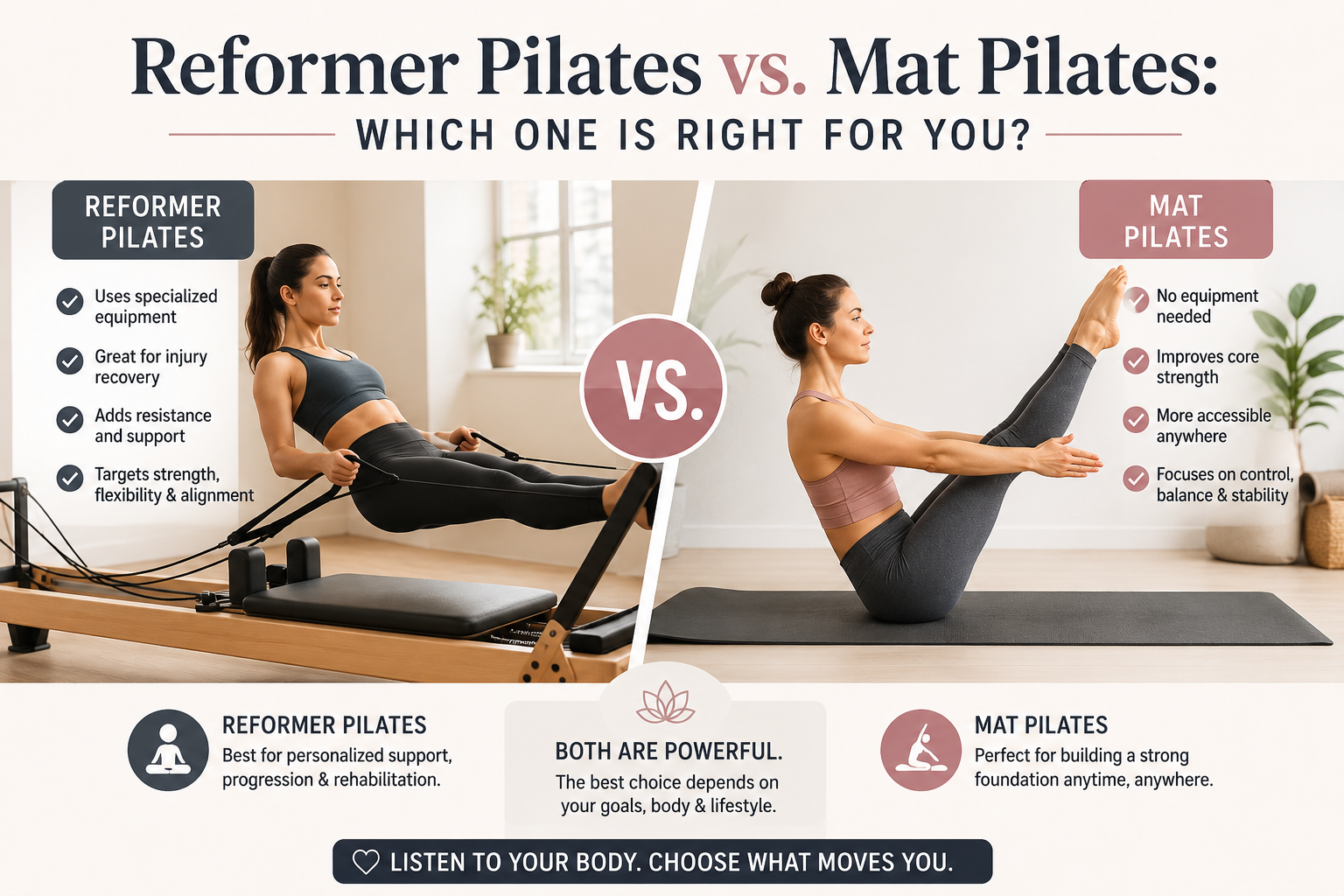
Reformer Pilates vs. Mat Pilates: Which One Is Right for You?
Same philosophy, two very different experiences. Here’s how to choose the practice that fits where you are right now.
One of the most common questions we hear at The Aura Circle is a simple one: reformer or mat? Both are rooted in the same Pilates principles — control, breath, and core-driven movement — but the experience of each is different enough that it’s worth knowing what you’re walking into before you book your first class.
The Common Ground
Whether you’re on a mat or a reformer, you’re working with the same foundation Joseph Pilates built the method on: precise, controlled movement, deep core engagement, and mindful breathing. Both formats build strength without bulk, improve posture, and sharpen the connection between body and mind. The difference lies in how that foundation is delivered.
Mat Pilates: Strength Built From Within
Mat Pilates uses your own body weight as resistance. Exercises are performed on the floor, often with small props like resistance bands, small balls, or light weights to add variation. Because there’s no machine assisting or resisting your movement, mat work demands more from your core stability and control from the very first rep.
- Best for: Building foundational core strength and body awareness
- Feel: Grounded, meditative, focused on precision over intensity
- Accessibility: Easy to modify for all levels, and skills transfer directly to everyday movement
Reformer Pilates: Resistance With Precision
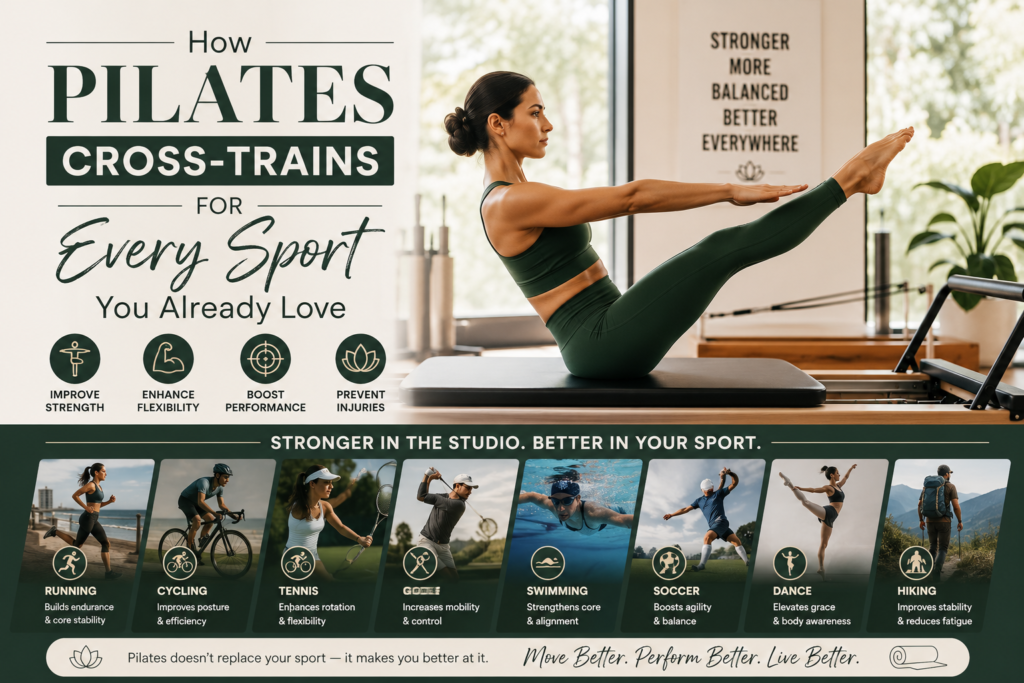
The reformer is a spring-loaded machine with a sliding carriage, straps, and a foot bar — and it changes the entire experience. Springs can add resistance to build strength, or assist movement to support mobility and rehabilitation. The result is a workout that can be gentler on the joints while still delivering a deeper, more targeted challenge to specific muscle groups.
- Best for: Targeted strength building, injury recovery, and progressive resistance training
- Feel: Dynamic, fluid, and often more physically demanding than mat work
- Accessibility: Adjustable resistance makes it suitable for beginners and advanced practitioners alike
Choose Mat Pilates If…
You’re new to Pilates and want to build foundational control first.
You prefer practicing anywhere, without equipment.
You want a lower-cost entry point into the practice.
Choose Reformer Pilates If…
You’re recovering from an injury and need adjustable resistance.
You want a more dynamic, full-body challenge.
You’re looking to progress strength training with precision.
Many of our members at The Aura Circle actually do both — mat classes to build the foundation, reformer sessions to deepen the challenge.
Do You Have to Choose Just One?
Not at all. In fact, the two formats complement each other beautifully. Mat Pilates sharpens the mind-body awareness and core control that make reformer sessions more effective, while reformer work adds resistance and variety that keeps mat practice progressing. Many of the most consistent, long-term Pilates practitioners rotate between both formats depending on their energy, goals, and how their body feels that week.
What to Expect in Your First Class
- Wear fitted, comfortable clothing that allows your instructor to see your alignment.
- Come with an open mind — Pilates rewards precision over intensity, so the “burn” builds differently than in a typical gym workout.
- Communicate with your instructor about any injuries, pregnancy, or physical limitations so your session can be modified appropriately.
- Expect to feel it the next day — even a gentle-looking mat or reformer session activates muscles you don’t usually notice.
Finding Your Practice
There’s no universally “better” choice between mat and reformer Pilates — only what’s better for your body, your goals, and this particular season of your life. At The Aura Circle, our instructors help every member find that balance, whether you’re just beginning your Pilates journey or looking to deepen an existing practice.
Find Your Practice at The Aura Circle
Book a trial class — mat or reformer — and let our instructors help you find what fits.
Book a Trial Class