Discover why rest is not the opposite of your wellness practice — it’s the heart of it. The Aura Circle explores the science and philosophy of intentional recovery, nervous system restoration, and building a life that honours both effort and ease.

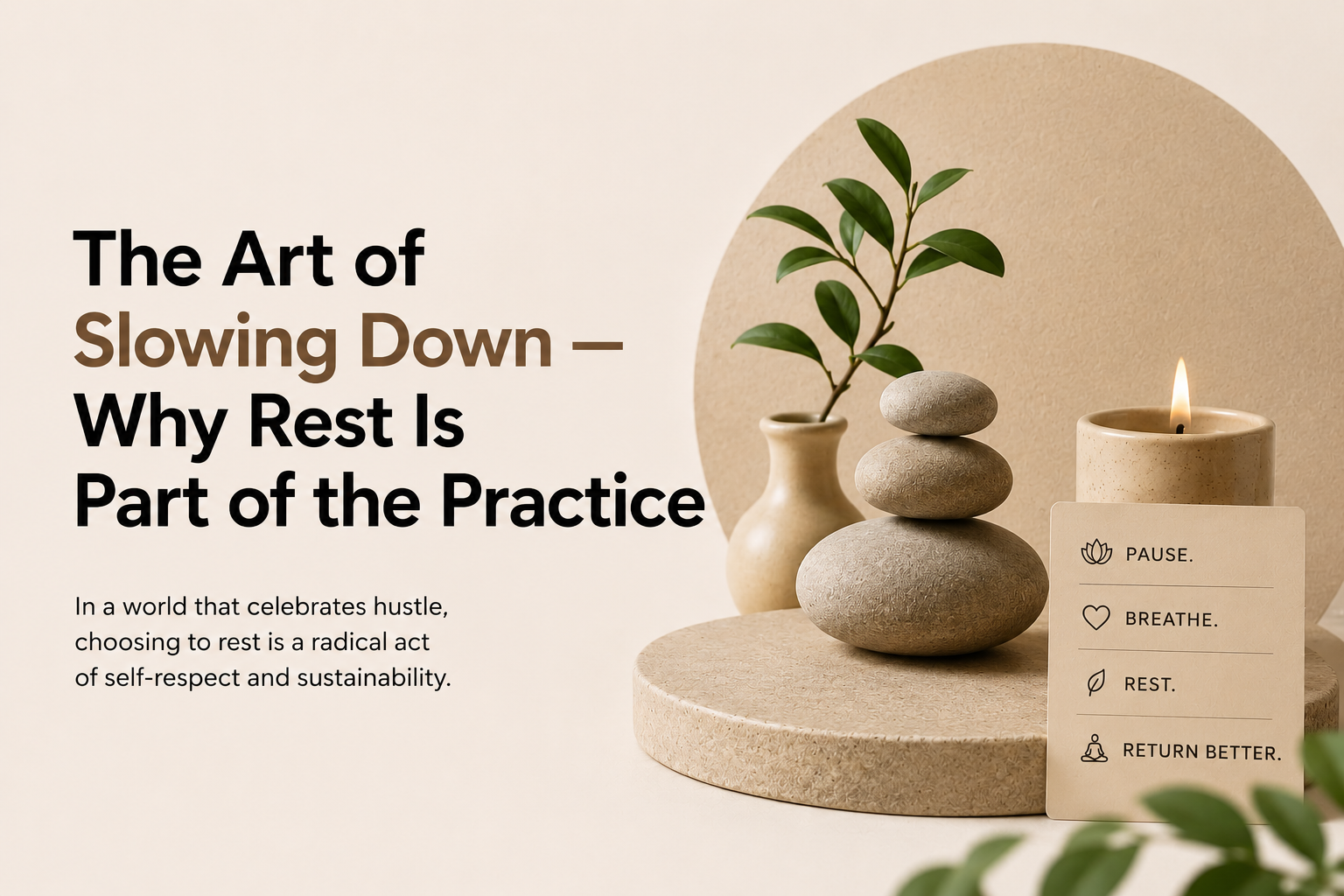
We Have Forgotten How to Stop
There is a particular kind of exhaustion that doesn’t come from doing too much — it comes from never truly stopping. The body moves through the day, ticking tasks, responding, producing. But beneath the movement, the nervous system is quietly accumulating a debt that sleep alone cannot repay.
Modern wellness culture has done something curious: it has turned recovery into another performance. Rest must be optimised. Sleep must be tracked. Stillness must be earned. And so we arrive at restoration already tired, already behind, already measuring whether we are doing it correctly.
At The Aura Circle, we believe in a different understanding — one that treats rest not as a reward for effort, but as an integral part of the practice itself.
“What the body cannot integrate, it carries. Rest is how it learns to let go.”
What Rest Actually Does to the Body
When we slow down — genuinely, without agenda — a cascade of restorative processes begins. The parasympathetic nervous system comes online. Cortisol levels drop. Tissues repair. The brain consolidates learning, both physical and emotional.
This is not passive. The body in rest is extraordinarily active — pruning, repairing, recalibrating. What feels like doing nothing is, in fact, the body doing the work that intensity cannot. The practice of Pilates, breathwork, and mindful movement creates the conditions for this. But the rest between sessions is where the transformation solidifies.
The Science of Recovery
Research in exercise physiology consistently shows that gains in strength, flexibility, and coordination happen not during training but in the recovery window that follows. The same is true for nervous system regulation: the parasympathetic reset that begins in a session deepens in the hours and days after — if we allow it.
The Six Qualities of Intentional Rest
Not all rest is equal. Here are the qualities that distinguish restorative stillness from mere inactivity.
01
Presence
Rest requires that you actually arrive — not scroll, not plan, not replay. A body present in stillness recovers far faster than one that is physically still but mentally racing.
02
Permission
The most common barrier to rest is the belief that it must be earned. Releasing this allows the nervous system to actually downregulate rather than stay on alert.
03
Breath
Slow, lateral breathing is the fastest route into the parasympathetic state. Even five minutes of conscious breath changes the chemistry of the body measurably.
04
Warmth
Physical warmth — a bath, sunlight, a heated room — activates the same neural pathways as social safety. The body relaxes more deeply when it feels held.
05
Rhythm
Rest works best when it is rhythmic — predictable windows of stillness that the nervous system can learn to anticipate and trust.
06
Witness
Sometimes rest means simply observing — the quality of your tiredness, the texture of your tension — without trying to fix it. Awareness itself is healing.
How Rest Shows Up in Your Practice
In the context of mindful movement, rest takes many forms. Understanding them helps you work with the full arc of your practice rather than only its most active edge.
I
The Pause Within Movement
In Pilates, the breath pause at the top of a movement — that still point before the return — is not dead time. It is the moment the body integrates the effort just made. Rushing through it is like closing a book before the last sentence.
II
The Rest Day as Practice
A day without structured movement is not a day lost — it is a day the body uses to consolidate what it has learned. Walking, gentle stretching, time in nature — these are active rest, movement in service of recovery.
III
The Season of Withdrawal
Longer periods of reduced intensity — whether by choice or necessity — are not setbacks. They are seasons. The body that rests seasonally returns to practice with a depth that relentless consistency rarely produces.
Signs Your Body Is Asking for Rest
The body rarely shouts. It whispers — in patterns of fatigue, irritability, and plateaus that resist effort. Learning to read these signals is as important as any physical skill.
- Persistent soreness that doesn’t resolve between sessions
- Decreased motivation or dread before practice
- Disrupted sleep despite physical tiredness
- Heightened emotional reactivity or a low threshold for overwhelm
- Movements that feel mechanical — performed, not inhabited
- A sense of going through the motions rather than being present in them
“The body speaks in symptoms before it speaks in illness. Rest is how you respond before it becomes urgent.”
Building a Life That Includes Rest
Rest is not something that happens when everything else is done. In a culture of chronic busyness, it must be chosen — actively, repeatedly, without apology. This is not indulgence. It is maintenance of the most essential kind.
Begin small. A ten-minute window of genuine stillness each day — no screen, no agenda — is more restorative than an hour of passive distraction. Let the quality of attention you bring to your practice extend into the way you inhabit the quieter parts of your day.
At The Aura Circle, we hold space for both the effort and the ease. Because a practice that honours only intensity is incomplete. The mat teaches us to move well. Rest teaches us to live well.
The Aura Circle
Ready to Return to Yourself?
Community sessions are open to all levels. No experience needed — only the willingness to show up.
Book Your Spot