Movement & Wellness Why Pilates Is the Ultimate Mind-Body Practice The Aura Circle · May 2026 · 6 min read More than a fitness trend, Pilates is a philosophy of presence — a way of moving that rewires how you inhabit your body, every single day. Movement as a Form of Listening Most forms of …

Movement & Wellness
Why Pilates Is the Ultimate Mind-Body Practice
The Aura Circle
·
May 2026
·
6 min read
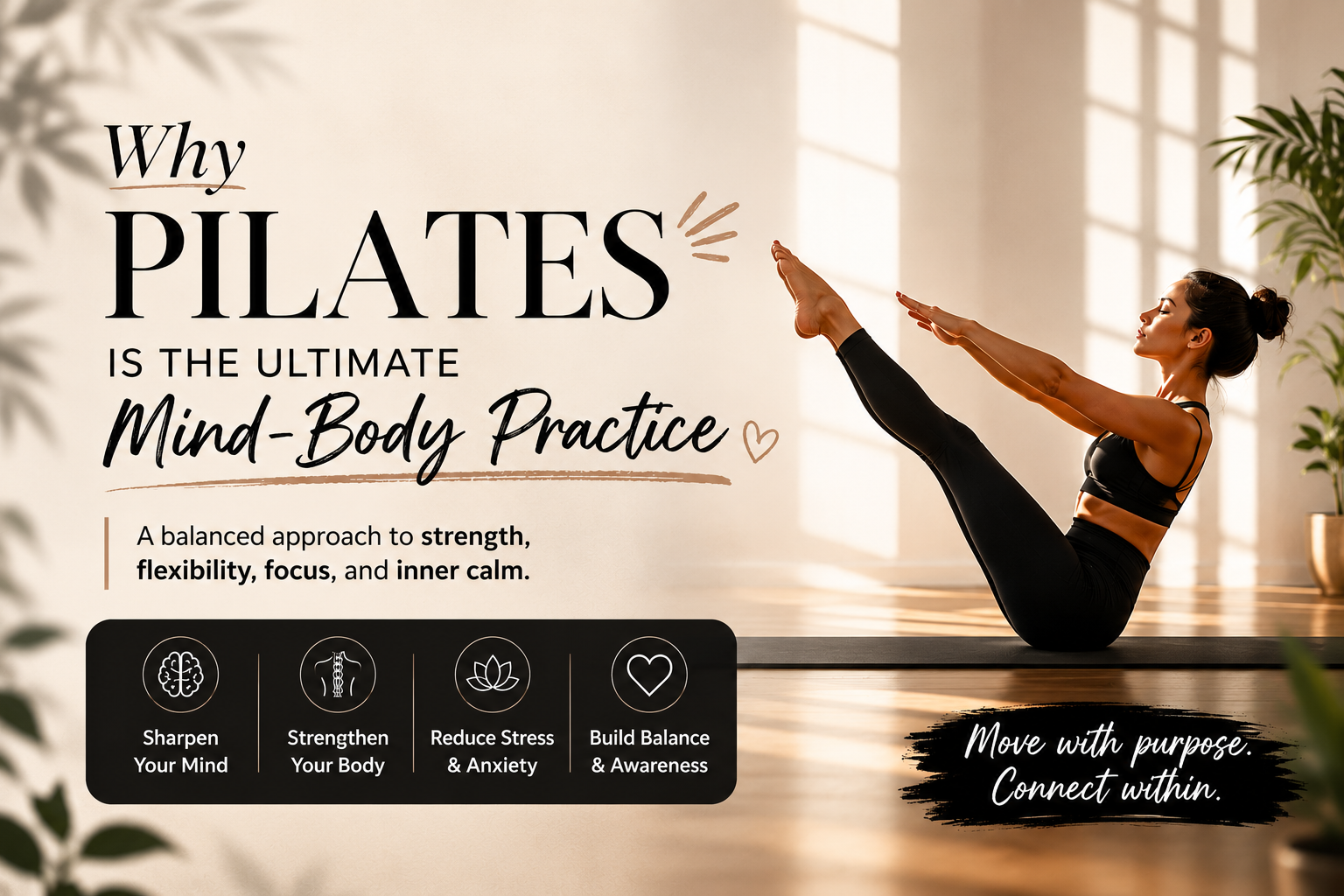
More than a fitness trend, Pilates is a philosophy of presence — a way of moving that rewires how you inhabit your body, every single day.
Movement as a Form of Listening
Most forms of exercise ask your body to perform. Pilates asks it to listen. Every slow, deliberate movement — the controlled roll-down, the engaged core through a leg circle, the breath-timed teaser — is an act of turning inward, of building a dialogue between your mind and the deeper layers of muscle you rarely notice until they’re asked to show up.
This is why Pilates endures not as a trend but as a practice. It was developed nearly a century ago by Joseph Pilates, who called his method “Contrology” — the art of controlling the body through the mind. What he understood then, neuroscience now confirms: the quality of our movement shapes the quality of our attention, and vice versa.
When we move with intention, we don’t just strengthen muscles — we recalibrate the nervous system and cultivate presence.
The Six Principles That Make It Different
Pilates is built on six foundational principles that distinguish it from conventional gym training. Together, they transform exercise into a meditative, whole-body experience.
01
Breath
Lateral thoracic breathing engages the deep core and anchors you in the present moment — the most immediate tool for stress regulation.
02
Concentration
Every movement demands full mental presence. Pilates is inherently a mindfulness practice, simply delivered through the body.
03
Control
You work with the minimum force necessary to produce maximum effect — a lesson in efficiency that extends far beyond the mat.
04
Centering
All movement originates from the core — not just the abs, but the deep stabilisers that support your spine and ground your movement.
05
Precision
A single perfectly aligned repetition outperforms twenty careless ones. Quality of movement is the practice itself.
06
Flow
Transitions between movements are as important as the movements themselves. There’s a grace to be cultivated, not rushed.
What Consistent Practice Feels Like
Members of the Aura Circle often describe their Pilates journey in three phases. In the first few weeks, there’s the discovery — muscles waking up, postural habits becoming visible, the novelty of working slowly. Then comes the integration phase, where the breath patterns and core engagement begin to appear outside of class: in how you sit at your desk, how you carry groceries, how you breathe before a difficult conversation.
The third phase is the quietest and perhaps the most profound: a baseline sense of ease in the body. Not the absence of challenge, but the presence of a reliable relationship with your own physical self. You trust your body more. Stress moves through you differently. You recover faster — not just physically, but emotionally.
The mat becomes a mirror. What you practise in stillness begins to show up in motion, in life, in the moments that ask the most of you.
Pilates and the Nervous System
One of the most underappreciated benefits of Pilates is its effect on the autonomic nervous system. The slow, rhythmic nature of the practice — combined with conscious, lateral breath — activates the parasympathetic response, the biological counterweight to stress. Sessions often end with participants feeling simultaneously more alert and more calm.
At Aura Circle, sessions are designed with this in mind. Movement is curated not just for physical benefit, but to create a reset — an hour in which the noise of modern life recedes and the body is given permission to restore. Moving with others who share this intention amplifies the effect. There is a resonance to collective stillness that goes deeper than solitary practice.
Beginning Your Practice
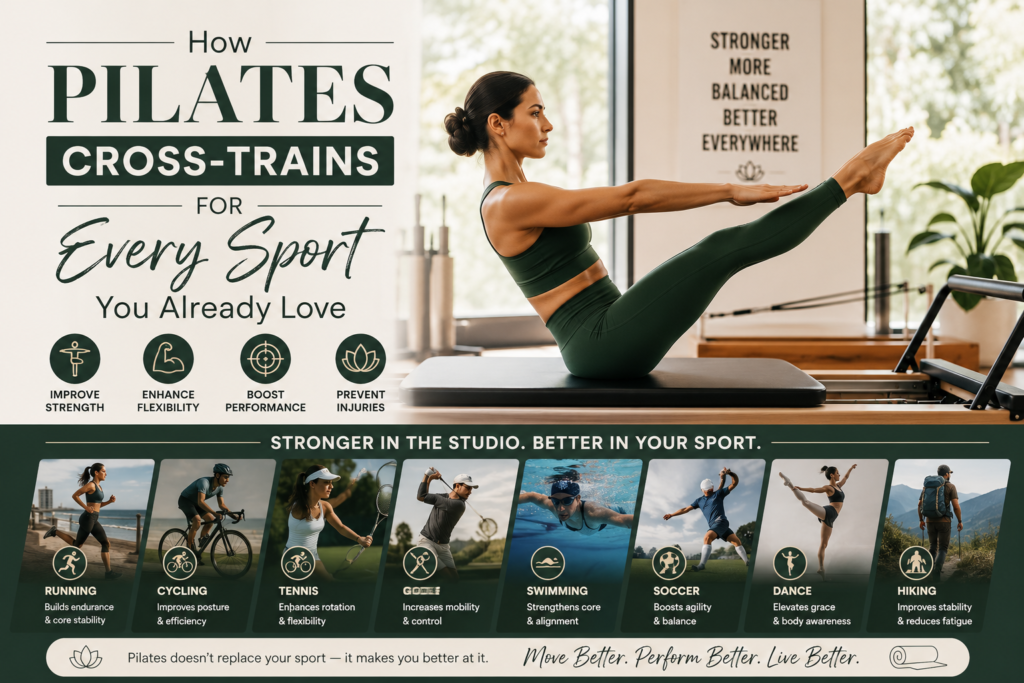
The most common barrier to Pilates is the belief that one needs a certain level of fitness to begin. The opposite is true. Pilates meets you exactly where you are — for the person recovering from injury, for the athlete seeking to refine, for the person who simply wants to feel at home in their body again.
Begin with curiosity rather than expectation. Let the first session be about noticing — what feels unfamiliar, where your breath gets stuck, which side of your body you favour. At The Aura Circle, you won’t be counted. You won’t be pushed. You’ll be guided back, steadily and with care, to yourself.
Ready to experience intentional movement? Community sessions are open to all levels — no experience required.
Book Your Spot